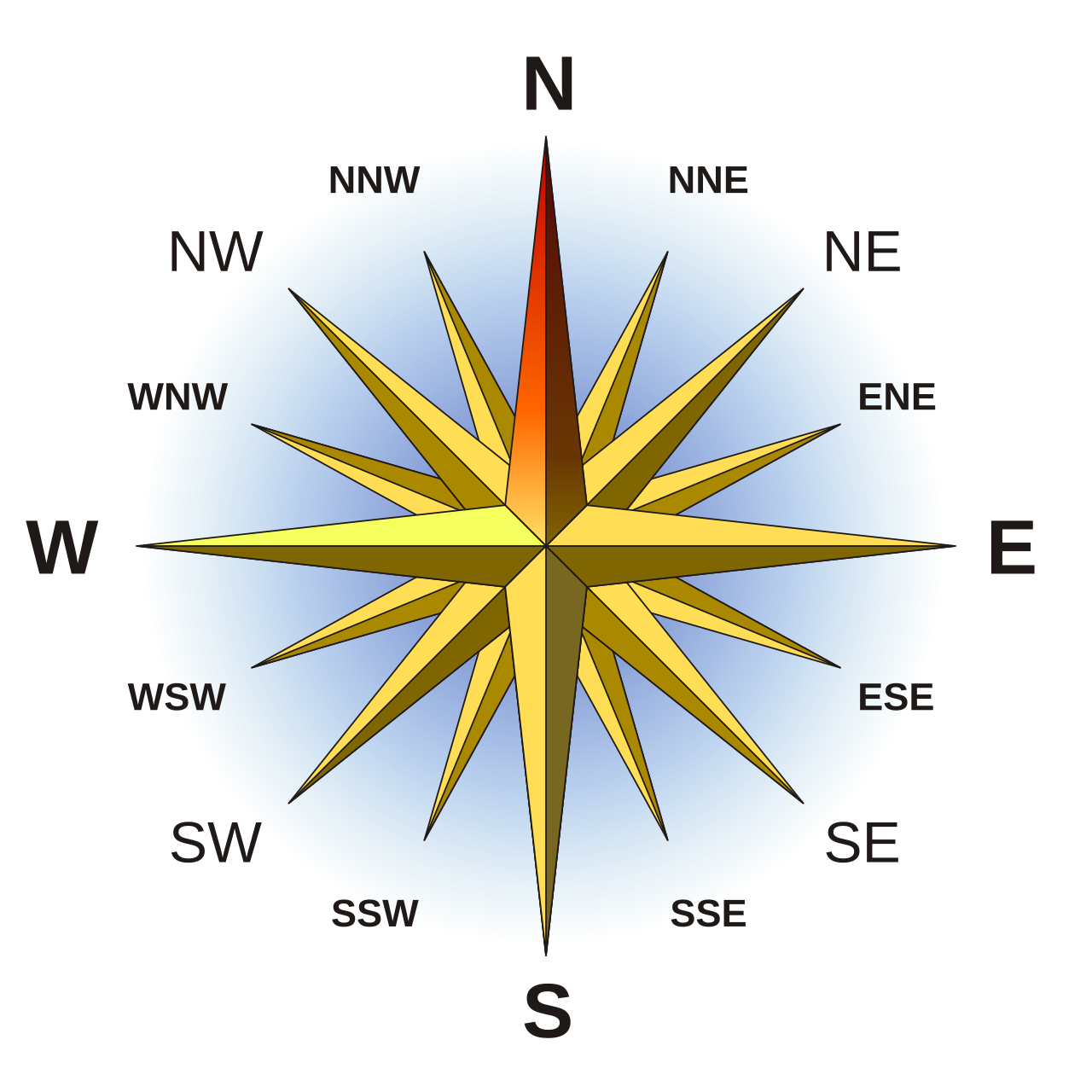
Understanding 'North' in the Louisiana Quake Context: Beyond Basic Definitions
When seismic activity rattles a region, residents and curious onlookers alike rush to understand what happened. For those in the Pelican State recently experiencing tremors, a search for "north louisiana quake" is a natural first step. Yet, what many might surprisingly encounter are fundamental dictionary definitions of the word 'north' – a stark disconnect from their immediate need for information about an earthquake. This article delves into why understanding 'north' in the context of a
north louisiana quake goes far beyond simple cardinal directions, exploring the geographical, geological, and informational nuances that truly matter when the ground begins to shake.
The Geographic Significance of 'North' in Louisiana's Seismic Landscape
Louisiana, often perceived as geologically stable, is not entirely immune to seismic events. While not sitting on a major plate boundary, minor tremors do occur, particularly in its northern reaches. When we talk about a "
north louisiana quake," the term 'North' isn't merely a directional indicator; it specifies a distinct geographical region with particular geological characteristics. North Louisiana encompasses parishes like Caddo, Bossier, Webster, Lincoln, Ouachita, and Morehouse, characterized by rolling hills, river floodplains, and different underlying geological formations compared to the state's southern coastal plains.
Geologically, this region is part of the North American Craton, a stable continental interior. However, subtle stresses within the crust, often associated with ancient rift zones or deep-seated fault systems that are not always visible at the surface, can lead to occasional seismic activity. For instance, the Meers Fault in Oklahoma or the New Madrid Seismic Zone, though distant, can sometimes influence stress fields that extend into neighboring states, including parts of North Louisiana. Understanding the 'north' in
north louisiana quake therefore requires an appreciation of this specific regional geology, which dictates the likelihood and characteristics of any tremors experienced. It's about defining the 'where' in a way that informs the 'why' and 'how' of the seismic event.
Why Dictionary Definitions Miss the Mark for a North Louisiana Quake Search
Imagine feeling a tremor, then rushing to your computer or phone to search for "
north louisiana quake." Your immediate need is to find information about the event itself: *Where was the epicenter? How strong was it? Is there a risk of aftershocks? What should I do?* If your search results are dominated by dictionary definitions of "north" – explaining it as "the direction opposite to south," "the northern part of a country," or even "the North Pole" – you're experiencing a fundamental failure of information retrieval. These definitions, while linguistically accurate for the word 'north', are completely irrelevant to your urgent inquiry.
The core issue, as highlighted by sources like Oxford, Britannica, and Cambridge dictionaries (which solely define the word "north" and contain no content regarding seismic events), is that they address the *lexical meaning* of a single word, not the *semantic context* of a specific phrase describing a real-world phenomenon. A user searching for "
north louisiana quake" isn't trying to learn what 'north' means; they're trying to understand an earthquake that happened in a particular part of Louisiana. This gap underscores a critical point: generic linguistic definitions, by their very nature, cannot provide the contextual, event-specific details that define an actual seismic incident. For a deeper dive into this phenomenon, explore
North Louisiana Quake: Why Dictionary Definitions Fall Short.
What 'North' Really Implies in Louisiana Quake Reporting and Understanding
When we speak of a "
north louisiana quake," the term 'North' carries significant weight, implying a host of critical details far beyond a simple compass point. It frames the discussion around specific parameters crucial for understanding and responding to the event.
*
Specific Location and Epicenter: 'North' pinpoints the general area. Further refinement identifies the epicenter – the exact point on the Earth's surface directly above where the quake originated. This might be near a specific town like Ruston, Shreveport, or Monroe, allowing residents to gauge their proximity to the most intense shaking.
*
Geological Context and Fault Systems: While Louisiana isn't famous for its fault lines, knowing the quake occurred in 'North' Louisiana allows geologists to consider local geological features or subtle, ancient fault systems that might have been reactivated. This regional context helps assess the potential for future events.
*
Impact Zones and Preparedness: The 'North' specifies the communities most likely to have felt the tremors and potentially sustained any damage. This information is vital for emergency services to direct resources and for residents to understand their risk. Practical preparedness tips become regionally relevant, informing residents of North Louisiana on how to secure their homes or what actions to take during a tremor.
*
Historical Precedent: Are quakes common in *this specific part* of Louisiana? Understanding historical seismic activity within North Louisiana provides valuable context, helping to determine if the event is an isolated incident or part of a recurring pattern.
As the Britannica and Oxford dictionaries confirm, linguistic definitions of 'north' are devoid of any of these critical details. For a complete picture, one needs to look beyond basic word meanings. For further context on this, consider reading
Louisiana Quake: No Details in Oxford or Britannica.
Preparing for the Unlikely: Quake Safety in North Louisiana
While major earthquakes are rare in Louisiana, even minor tremors can be unsettling. Being prepared, especially in areas like North Louisiana where the risk is present, however small, is crucial.
- Drop, Cover, Hold On: This is the golden rule during an earthquake. Drop to the ground, take cover under a sturdy table or desk, and hold on until the shaking stops. If no cover is available, drop to the floor next to an interior wall and cover your head and neck with your arms.
- Secure Your Home: In advance, secure heavy furniture, appliances, and water heaters to walls. Store heavy items on lower shelves.
- Emergency Kit: Maintain an emergency kit with water, non-perishable food, a first-aid kit, a flashlight, a whistle, and a battery-powered radio.
- Family Plan: Establish a family communication plan, including an out-of-state contact, and identify safe meeting places.
- Know Your Local Alerts: Be aware of how local authorities in North Louisiana will disseminate information and warnings during and after a seismic event.
These proactive steps can significantly enhance safety and minimize anxiety if a
north louisiana quake occurs again.
Decoding the Search Intent: Bridging the Gap Between Words and Events
The journey from typing "
north louisiana quake" into a search bar to finding meaningful information highlights a critical challenge in information retrieval: understanding user intent. When a user queries such a phrase, they aren't looking for a linguistic dissection of 'north'; they are seeking comprehensive, context-rich details about a specific event in a specific geographical area. Search engines strive to bridge this gap by moving beyond mere keyword matching to semantic understanding.
Content that directly addresses the "who, what, where, when, why, and how" of a
north louisiana quake is invaluable. It provides the geological background, the local impact, safety protocols, and official updates that dictionary definitions inherently cannot. As information creators, our role is to produce content that anticipates this real-world need, offering practical advice and factual data that resonates with the immediate concerns of those affected or interested in seismic activity in Louisiana. This proactive approach ensures that when the ground shakes, residents can quickly access the information they truly need, rather than getting lost in linguistic abstractions.
Conclusion
The term 'North' within the phrase "
north louisiana quake" is far more than a simple cardinal direction. It delineates a specific geographical region, carries implications for unique geological conditions, and critically informs the context of any seismic activity experienced there. While dictionary definitions for the word 'north' serve their purpose in linguistic understanding, they fall demonstrably short when a user is urgently seeking information about a real-world event. Understanding a
north louisiana quake demands a shift from defining individual words to comprehending the collective meaning of the entire phrase – encompassing the location, geology, impact, and human experience of the event. By providing detailed, context-specific information, we can better serve the public, ensuring that when tremors occur, clarity and preparedness prevail over definitional confusion.